Outdoor construction and landscape design require materials that deliver both structural integrity and visual cohesion. From defining garden borders to creating stable pathways, selecting the right combination of edging, aggregates, and surface elements ensures long-term performance. A well-planned hardscape not only improves usability but also enhances the overall presentation of outdoor spaces.
For contractors and landscape suppliers, clear material positioning and application guidance support efficient installation and better project outcomes. Each component plays a specific role, contributing to drainage, stability, and visual structure.
Defined Borders with Long-Term Performance
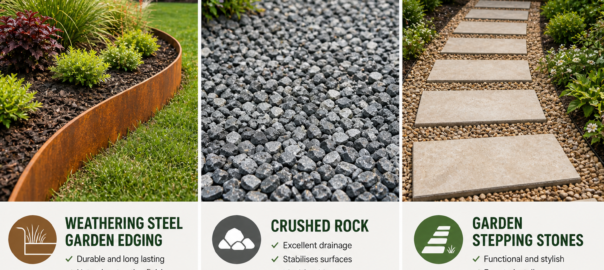
Creating clean, durable boundaries is essential in landscape design. Weathering steel garden edging offers a practical solution by combining structural strength with a distinctive finish that evolves over time. Its natural patina forms a protective layer, reducing the need for ongoing maintenance while delivering a consistent appearance.
This material is particularly suited to garden beds, pathways, and lawn separation where defined lines are required. Its flexibility allows it to be shaped to suit both straight and curved designs, supporting a wide range of layout configurations.
From a product perspective, emphasising durability, ease of installation, and minimal upkeep aligns with buyer intent. These factors contribute to its growing adoption across residential and commercial projects.
Base Preparation and Drainage Efficiency
A stable base is fundamental to any outdoor installation. Materials such as crushed rock are widely used to create compacted layers that support pathways, driveways, and paved areas.
Its angular composition allows for effective compaction, reducing movement and improving load distribution. This makes it suitable for high-traffic areas where stability is critical. In addition to structural support, it enhances drainage by allowing water to pass through rather than accumulate.
Proper layering and compaction techniques are essential to maximise performance. When installed correctly, this material reduces maintenance requirements and extends the lifespan of surface finishes.
Functional and Aesthetic Pathway Solutions
Surface elements play a key role in both accessibility and design. Garden stepping stones provide a practical pathway solution while contributing to the visual structure of outdoor spaces.
These elements allow for controlled movement through garden areas without disrupting surrounding planting. They are commonly used in residential landscapes, courtyards, and transitional zones where a defined path is required.
Positioning should focus on versatility and ease of integration. Stepping stones can be arranged in various patterns, allowing for customised layouts that align with the overall design intent.
Integrated Landscape Planning
Effective outdoor design requires coordination between edging, base materials, and surface elements. Each component must be considered in relation to the others to ensure a cohesive and functional result.
For example, a pathway may incorporate steel edging to define its boundaries, a compacted aggregate base for stability, and stepping stones as the visible surface. This layered approach supports both durability and visual consistency.
Planning these elements together reduces the risk of rework and ensures that each material performs as intended within the broader design.
Durability and Maintenance Considerations
Long-term performance is a key factor in material selection. Products must withstand environmental conditions, including moisture, temperature variation, and regular use.
Metal edging systems provide resistance to corrosion and wear, while aggregates offer stability under load. Surface elements should be selected based on their ability to maintain appearance and functionality over time.
Clear communication around maintenance requirements helps set realistic expectations and supports better decision-making. Buyers are increasingly focused on solutions that minimise ongoing upkeep.
Installation Efficiency and Workflow
Material choice also impacts installation efficiency. Pre-formed edging systems simplify placement, while well-graded aggregates reduce preparation time. Modular surface elements allow for straightforward alignment and adjustment during installation.
For contractors, these efficiencies translate into reduced labour costs and improved project timelines. Clear specifications and reliable supply further support smooth execution.
Digital Visibility and Product Positioning
Search behaviour in this category is driven by application-specific queries. Users typically look for solutions to defined problems, such as creating borders, stabilising surfaces, or designing pathways.
Content should reflect this intent by focusing on practical use cases and clear product benefits. Structured headings, concise descriptions, and internal linking improve both user experience and search performance.
Product pages should include detailed specifications, installation guidance, and visual examples. This ensures that buyers can make informed decisions with confidence.
Conclusion
Hardscape materials form the foundation of effective landscape design. By selecting the right combination of edging, aggregates, and surface elements, businesses and property owners can achieve durable, functional, and visually consistent results.
A structured approach to material selection and application ensures that each component contributes to the overall success of the project. As outdoor spaces continue to evolve, clarity and performance will remain central to achieving long-term value.